
This post may contain affiliate links. Please read my disclosure policy for more details.
This easy mint yogurt sauce takes just 1 bowl and 5 minutes to prep, and it’s fresh, zippy, and versatile. Its lovely, bright flavor and texture pair well with veggies, salads, fritters, falafel, and all your delicious BBQ stuff!
Published in June 2022/Updated in Aug 2026

This is essentially a sauce, quite similar to tzatziki, but full of mint flavor and easier to whip up, since it doesn’t require grated cucumber and can be made in just one bowl.
Join my newsletter for free weekly recipes!
The luscious yet healthy Greek yogurt makes it extra-creamy, tangy, and fresh, rather than rich and heavy, but a dairy-free alternative works too if you wish (see the substitutions below).
Just chop the mint leaves, add them to the other ingredients, mix until smooth, season to taste, and serve with your favorite summer recipes such as grilled meat, vegetables, and salads. Imagine grilled peppers, eggplants, BBQs, or any dippable vegetables coming into season.
Simple and quick to make, this no-frills mint yogurt sauce is versatile, great to use a bunch of fresh mint, and perfect to keep in the fridge ready to jazz things up with its delicious, fresh flavor.
Enjoy!
List of ingredients
- Greek yogurt
- Fresh mint
- Extra virgin olive oil
- Lemon juice
- Garlic
- Cayenne pepper (optional)
- Salt & pepper
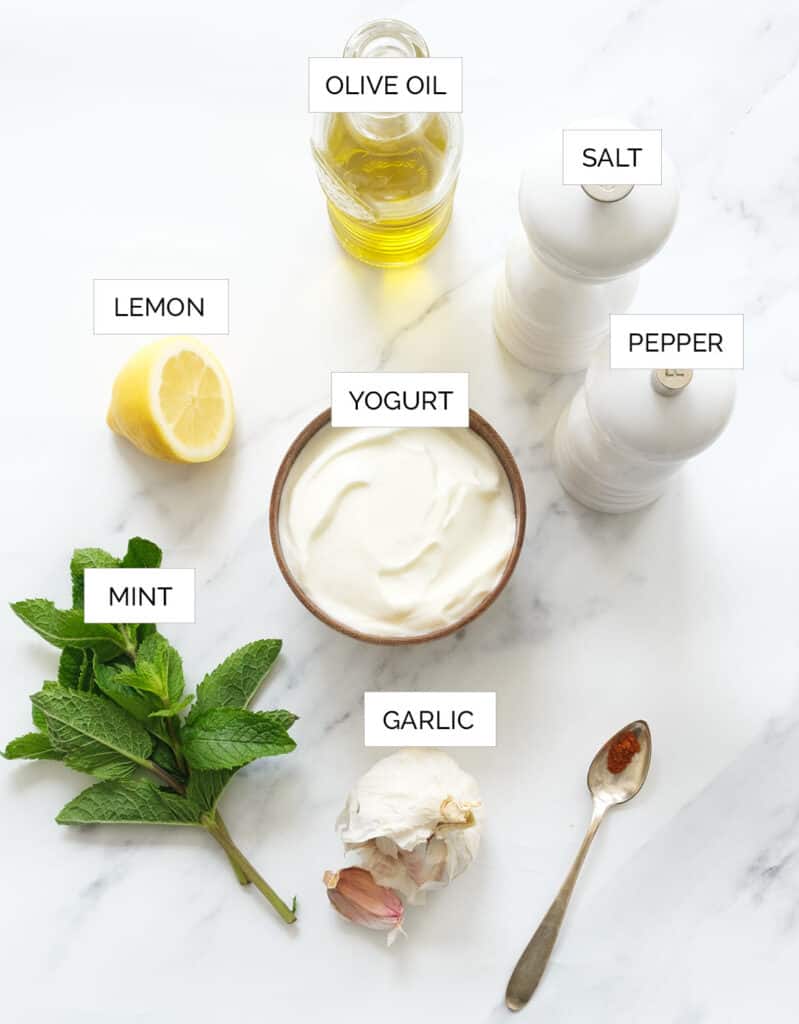
How to make mint yogurt sauce
(Note: this is a quick description with step-by-step photos; the full recipe is at the bottom of the page)
- Place the yogurt in a small bowl with lemon juice, olive oil, cayenne pepper, salt, pepper, and finely grated garlic (I use this zester, and it’s excellent for this job).
- Add the chopped mint leaves to the remaining ingredients.
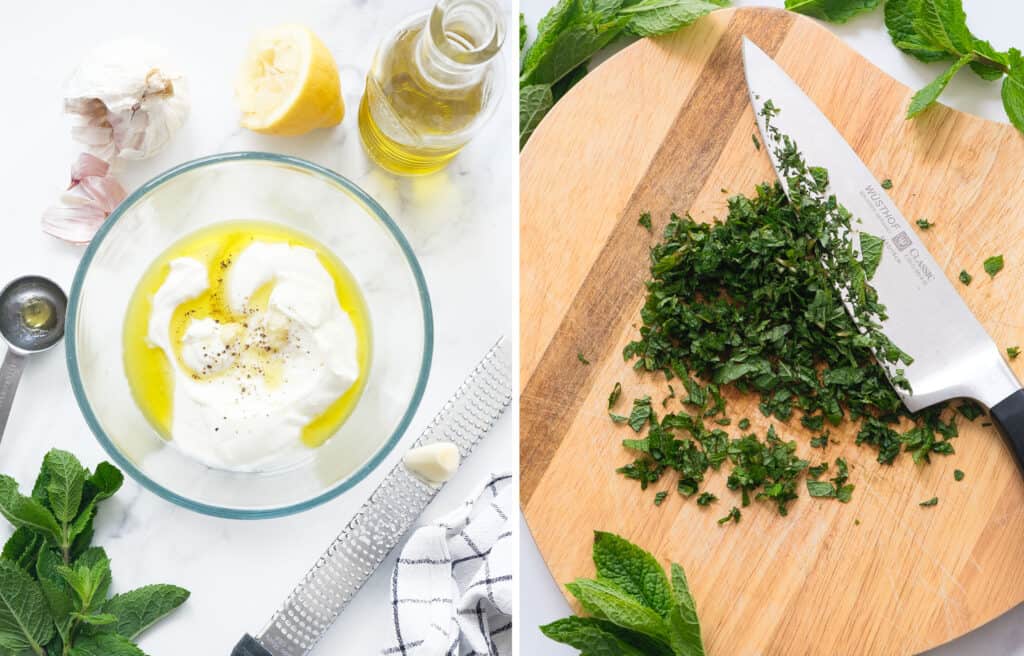
- Stir until smooth, season to taste, and serve it, or let it rest in the refrigerator for a couple of hours to develop the flavors.

Recipe notes
Mint yogurt sauce ingredients
Yogurt: I love whole-milk Greek yogurt for this recipe; it makes a creamy mint yogurt sauce that is rich and tangy. Full-fat yogurt without any sugar or flavoring, or a thick plant-based alternative such as plain coconut yogurt, works fine, too. I tested the recipe with soy yogurt, but the texture was quite thin for my liking.
Mint: It gives a sharp and refreshing flavor and contrast. Use only fresh herbs here, not dried. You can also add chopped cilantro or fresh dill with the mint if you fancy variations.
Lemon juice: For brightness.
Extra virgin olive oil: It brings everything together. Use good-quality extra virgin olive oil with its fragrant, fruity flavor.
Garlic: For a delicious garlicky bite.
Cayenne pepper: Just a little bit (optional), for a nice pop of heat!
Salt & pepper: Taste and adjust the seasoning to your liking until the flavor pops.

Storage tips
This yogurt sauce with mint keeps well in the refrigerator for about 3-4 days, stored in an airtight container. It’s not freezer-friendly.
How to serve it
My favorite way to enjoy this simple sauce is with roasted vegetables and pita bread for a fresh Mediterranean meal!
You can also use this mint yogurt dip to accompany grilled meat or salads like this lentil tabbouleh, barley salad, crispy lettuce salad, or winter salad with roasted root vegetables. Use it as a salad dressing or as a sauce for lamb burgers or grilled fish too. It also makes a fantastic appetizer with a crudités platter, highlighting cucumber, carrots, and all the vegetables you love!

More recipes with mint or yogurt?
If you have yogurt leftovers to use up, you might want to look at these delicious yogurt cake, strawberry bread, and frozen strawberry yogurt!
And if you are looking for more recipes that use mint, I’ve got you covered with these delicious ideas:
Lastly, let me know if you make this mint yogurt sauce recipe. Leave a comment and/or give this recipe a rating. I would love to hear from you guys and get your feedback!
And for more recipe updates, subscribe to my newsletter and follow me on Instagram, Pinterest, and Facebook. And, of course, if you make this recipe, don’t forget to tag me. : )
Mint Yogurt Sauce
Servings: 4
Calories: 73kcal
- 1 cup (250 grams) Greek yogurt (or full-fat plain yogurt)
- ½ garlic clove, finely grated
- 1 ½ Tablespoon extra virgin olive oil
- 1 ½ Tablespoon fresh lemon juice, use more if you like
- ¼ to ½ teaspoon fine salt, to taste
- ⅛ teaspoon freshly ground black pepper, or to taste
- ⅛ teaspoon cayenne pepper, or to taste (optional)
- 2-3 Tablespoons fresh mint leaves, chopped
-
Add the yogurt, olive oil, lemon juice, garlic, cayenne pepper, salt (I use about ½ scant teaspoon), and pepper to the bowl, and stir to blend. Chop the mint leaves, add them to the bowl, and stir to combine.
-
Let the mixture rest for 5 minutes to allow the flavors to mingle. Then taste and add additional lemon juice and/or salt and cayenne pepper, if necessary. You might add more chopped mint if you like; the recipe is very flexible, and you can adjust it to your liking.
-
Serve immediately at room temperature or chill for later (see the recipe card for storage).
Calories: 73kcal | Carbohydrates: 3g | Protein: 7g | Fat: 4g | Saturated Fat: 1g | Polyunsaturated Fat: 0.4g | Monounsaturated Fat: 3g | Trans Fat: 0.003g | Cholesterol: 3mg | Sodium: 508mg | Potassium: 115mg | Fiber: 0.3g | Sugar: 2g | Vitamin A: 162IU | Vitamin C: 3mg | Calcium: 80mg | Iron: 0.3mg
Join my newsletter for free weekly recipes!
PakarPBN
A Private Blog Network (PBN) is a collection of websites that are controlled by a single individual or organization and used primarily to build backlinks to a “money site” in order to influence its ranking in search engines such as Google. The core idea behind a PBN is based on the importance of backlinks in Google’s ranking algorithm. Since Google views backlinks as signals of authority and trust, some website owners attempt to artificially create these signals through a controlled network of sites.
In a typical PBN setup, the owner acquires expired or aged domains that already have existing authority, backlinks, and history. These domains are rebuilt with new content and hosted separately, often using different IP addresses, hosting providers, themes, and ownership details to make them appear unrelated. Within the content published on these sites, links are strategically placed that point to the main website the owner wants to rank higher. By doing this, the owner attempts to pass link equity (also known as “link juice”) from the PBN sites to the target website.
The purpose of a PBN is to give the impression that the target website is naturally earning links from multiple independent sources. If done effectively, this can temporarily improve keyword rankings, increase organic visibility, and drive more traffic from search results.


